


8 Crane Lifting Safety Principles – Safe Lifting Operations Training Chart
Price range: $36.99 through $45.99
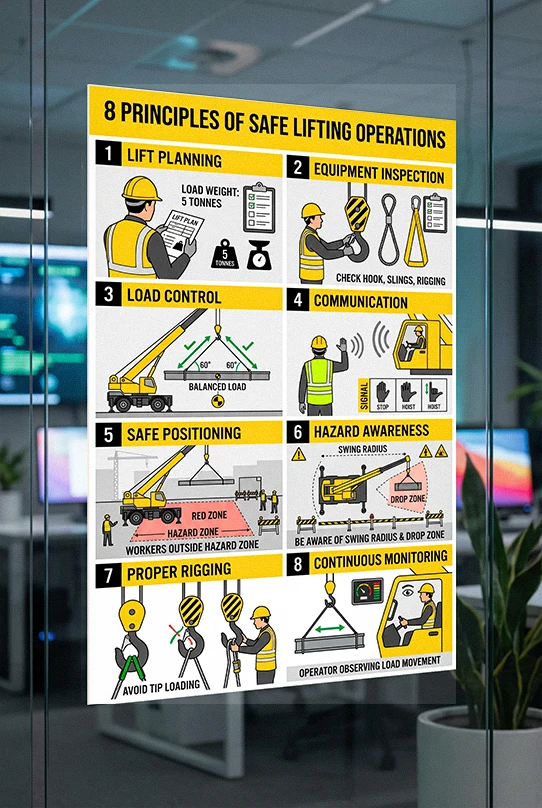
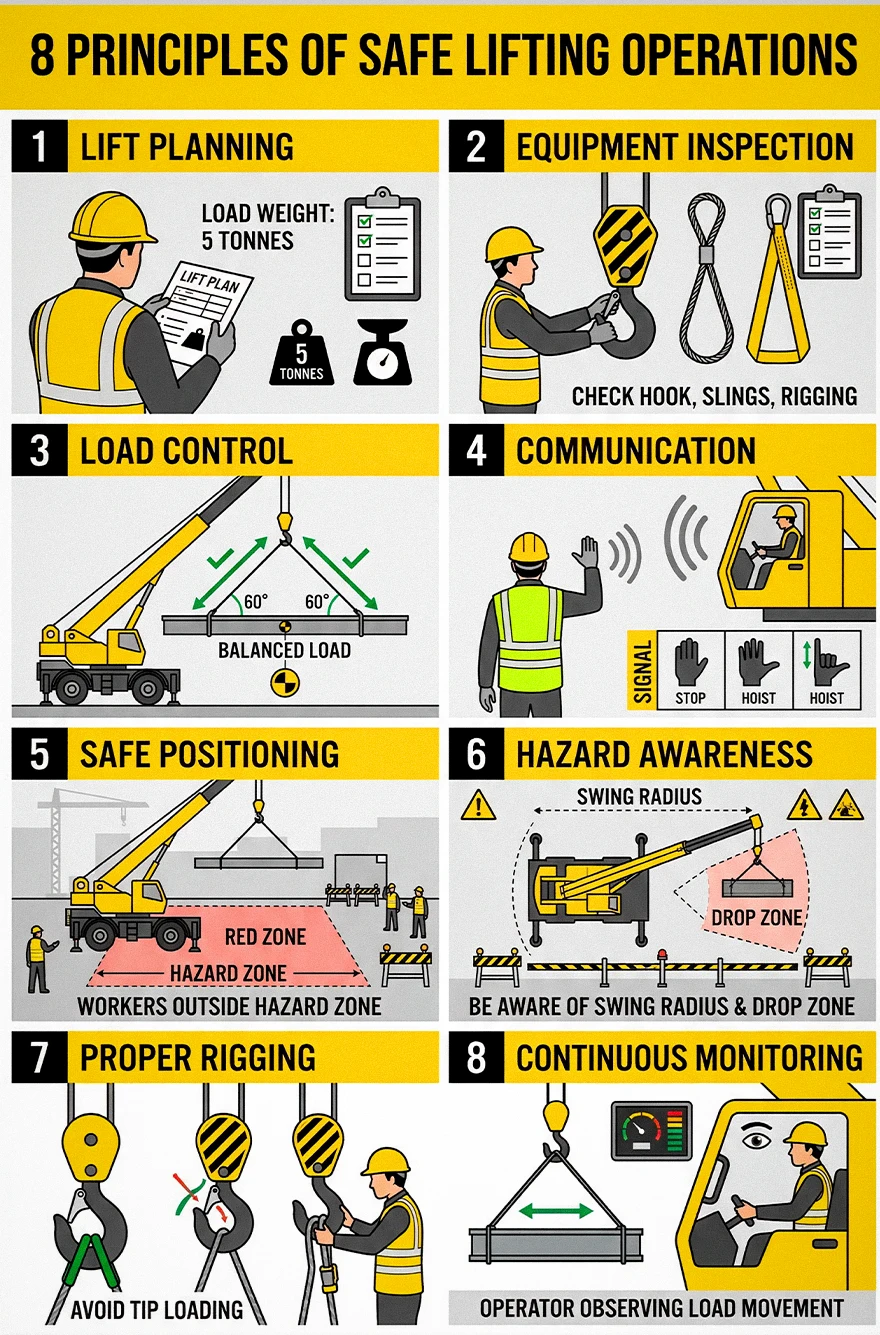
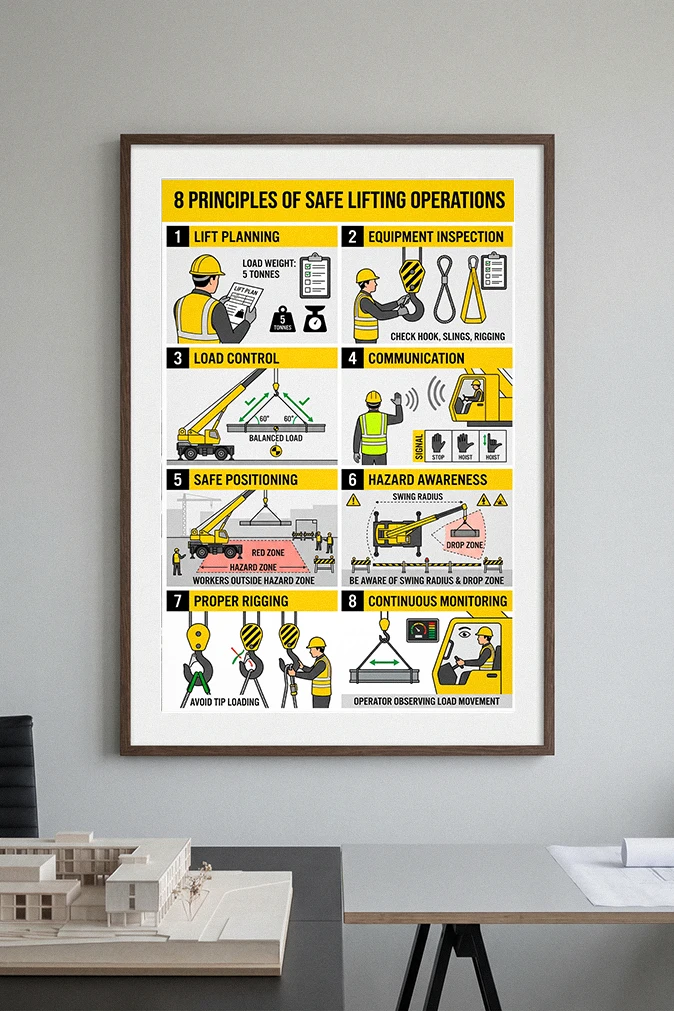
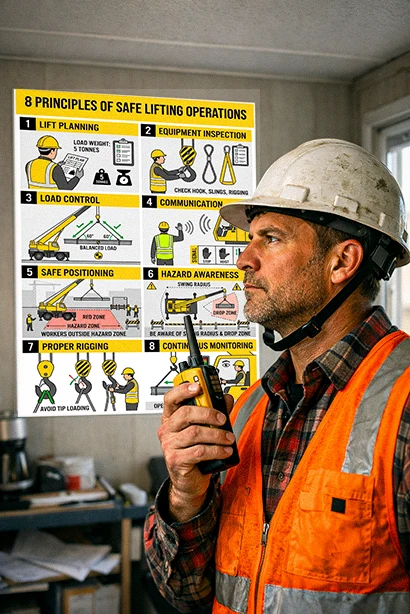
This crane lifting safety principles poster explains the eight essential safety practices used during crane lifting and rigging operations.
The chart illustrates key lifting procedures including lift planning, equipment inspection, load control, operator communication, safe positioning, hazard awareness, proper rigging, and continuous load monitoring.
Designed as a quick visual reference, the poster helps workers understand safe lifting procedures and improve hazard awareness during crane operations.
Ideal for:
• crane operator training
• rigging safety courses
• construction safety meetings
• lifting equipment training
• toolbox talks and safety boards
8 Crane Lifting Safety Principles
Safe lifting procedures are essential for preventing accidents during crane and rigging operations. The crane lifting safety principles illustrated in this chart provide a structured framework used in crane operator training and lifting safety programs.
Following these crane lifting safety principles improves jobsite safety, reduces lifting hazards, and ensures proper coordination between workers and crane operators.
Lift Planning
Every lifting operation should begin with a clear lifting plan that identifies load weight, lifting equipment, rigging configuration, and lifting path. Proper lift planning ensures that the operation follows established crane lifting safety.
Equipment Inspection
Before lifting begins, workers should inspect hooks, slings, shackles, chains, and lifting hardware. Checking lifting equipment helps prevent equipment failure and supports safe lifting practices.
Regular inspection is a critical part of crane lifting safety principles.
Load Control
Loads must be balanced and properly rigged to prevent tipping or uncontrolled movement. Maintaining load control ensures stability during lifting operations.
Effective load control is a core element of crane lifting safety principles.
Communication
Clear communication between the crane operator and signal person is essential for safe lifting operations. Standard hand signals or radio communication help coordinate lifting movements and reduce the risk of accidents.
Communication plays an important role in crane lifting safety principles.
Safe Positioning
Workers must remain outside hazard zones and avoid standing under suspended loads. Proper positioning protects workers from falling loads and moving equipment.
Maintaining safe positioning follows established crane lifting safety principles.
Hazard Awareness
Crane hazard zones include the swing radius, drop zone, and load path. Workers should be aware of these areas and avoid entering restricted zones during lifting operations.
Recognizing hazard zones is fundamental to crane lifting safety principles.
Proper Rigging
Correct rigging ensures loads are lifted securely and evenly. Workers must choose the correct slings and rigging equipment based on load weight and lifting conditions.
Proper rigging is a key part of crane lifting safety principles.
Continuous Monitoring
During lifting operations, workers should continuously monitor load movement and equipment performance. Monitoring helps detect unsafe conditions early and prevents accidents.
Continuous observation reinforces safe lifting procedures and supports crane lifting safety principles.
.
What are crane lifting safety principles?
Crane lifting safety principles are guidelines used to safely lift and move loads using cranes and rigging equipment. These principles include lift planning, equipment inspection, proper rigging, hazard awareness, and communication between workers.
Why is lift planning important in crane lifting?
Lift planning ensures the correct equipment and rigging configuration are used based on load weight and lifting conditions. Proper planning reduces the risk of equipment failure and lifting accidents.
What should be inspected before lifting operations?
Before lifting operations begin, workers should inspect slings, hooks, shackles, chains, and lifting hardware to ensure all equipment is in safe working condition.
This crane lifting safety principles chart is widely used in:
• crane operator certification programs
• construction safety training courses
• rigging safety workshops
• workplace safety training sessions
• toolbox talks and safety briefings
| Weight | N/A |
|---|


Reviews
There are no reviews yet.