


Crane and Rigging Safety Chart – Hand Signals, Sling Angles & Pre-Lift Inspection Guide
Price range: $36.99 through $45.99
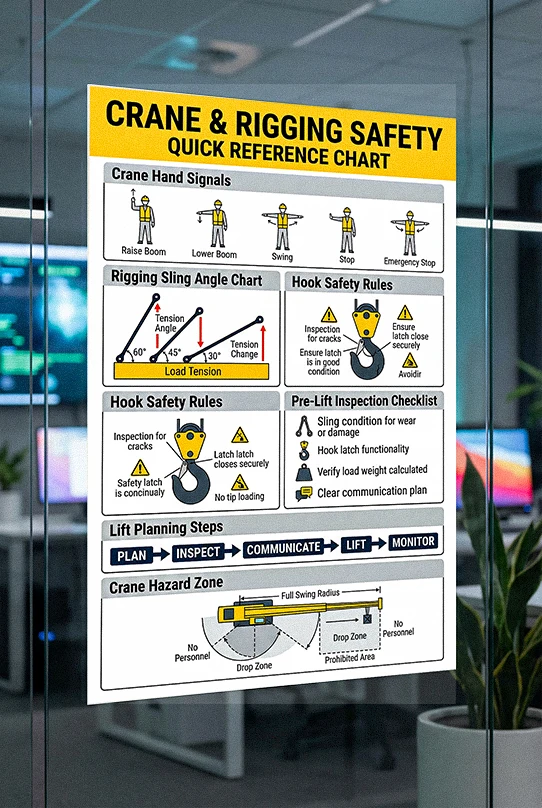
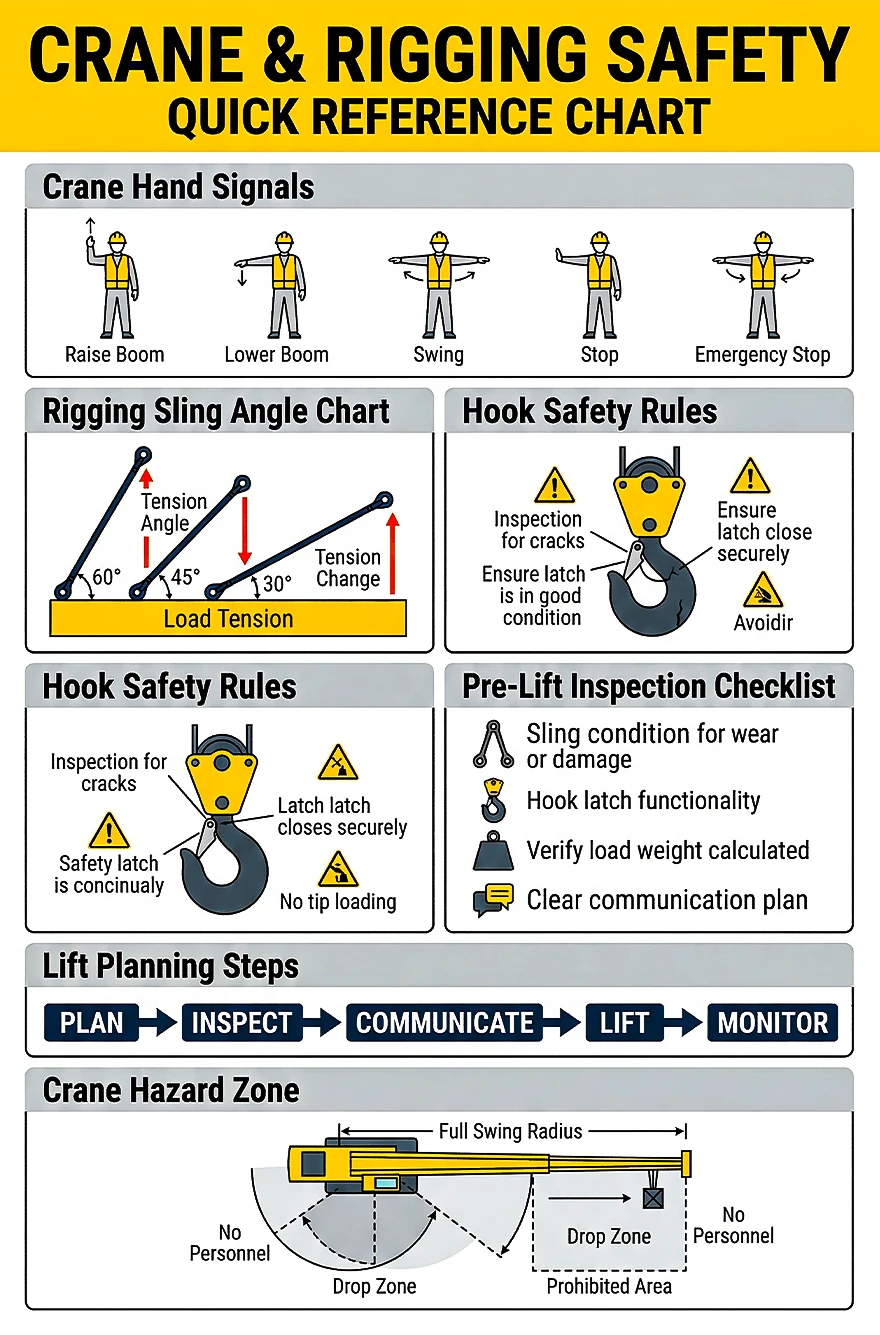
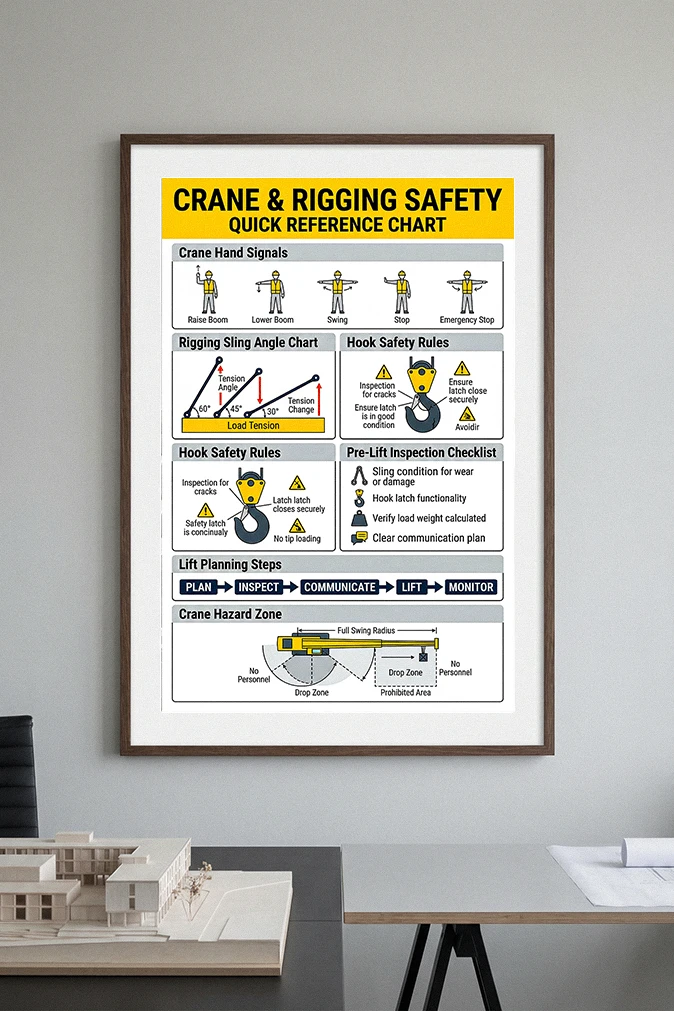
This crane and rigging safety chart provides a clear visual reference for the essential safety rules used during crane lifting and rigging operations. The poster combines multiple crane safety topics into one training guide, including crane hand signals, sling angle load tension diagrams, hook safety rules, pre-lift inspection steps, lift planning procedures, and crane hazard zone awareness.
Designed for safety training and jobsite reference, the chart helps workers understand safe lifting procedures and improve hazard awareness during crane operations.
Ideal for:
• crane operator training
• rigging safety courses
• construction safety meetings
• toolbox talks
• industrial lifting operations
Crane and Rigging Safety Chart for Lifting Operations
This crane and rigging safety chart provides a comprehensive overview of the most important safety procedures used during crane lifting operations. Proper crane and rigging safety practices help prevent accidents caused by improper signaling, incorrect rigging angles, damaged lifting equipment, and poor lift planning.
The poster combines several critical crane safety topics into one quick-reference chart used in crane operator training and rigging safety programs.
Crane Hand Signals
Crane hand signals allow signal persons to communicate clearly with crane operators when direct voice communication is not possible. Using standardized signals improves coordination and supports crane and rigging checklist during lifting operations.
Rigging Sling Angle Chart
The sling angle chart illustrates how sling angles affect load tension during lifting. As the sling angle decreases, tension in the rigging increases significantly. Understanding sling angles is essential for maintaining crane and rigging safety.
Hook Safety Rules
Hooks used during lifting operations must include functional safety latches and must be inspected for cracks or deformation. Proper hook inspection is a key part of maintaining crane and rigging safety.
Pre-Lift Inspection Checklist
Before lifting operations begin, workers should inspect rigging equipment, confirm load weight, verify communication procedures, and ensure lifting hardware is in good condition.
Following a structured checklist improves crane and rigging safety and helps prevent equipment failures.
Lift Planning Steps
Every lifting operation should follow a basic planning process:
Plan → Inspect → Communicate → Lift → Monitor
These steps form the foundation of safe lifting procedures and reinforce crane and rigging safety practices used across construction and industrial workplaces.
Crane Hazard Zone Awareness
Hazard zones around cranes include the swing radius, drop zone, and load path. Workers must remain outside these areas during lifting operations to prevent injury from moving equipment or falling loads.
Recognizing hazard zones is a critical element of crane and rigging safety training.
Ideal for Safety Training Programs
This crane and rigging safety chart is commonly used in:
• crane operator certification programs
• rigging safety training courses
• workplace safety training sessions
• construction site safety boards
• lifting operation toolbox talks
Visual training charts like this help reinforce crane and rigging safety procedures and improve hazard awareness on busy jobsites.
What is crane and rigging safety?
Crane and rigging safety refers to the procedures used to safely lift and move loads using cranes and rigging equipment. These practices include equipment inspection, proper sling angles, safe communication signals, and hazard zone awareness.
Why are sling angles important in rigging?
Sling angles affect the tension placed on lifting slings. Smaller angles increase tension in the rigging, which can overload equipment. Understanding sling angles is essential for safe lifting operations.
What should be inspected before a crane lift?
Before lifting, workers should inspect slings, hooks, shackles, lifting hardware, and verify load weight and communication procedures to ensure the lift can be performed safely.
Used in Crane Operator Training
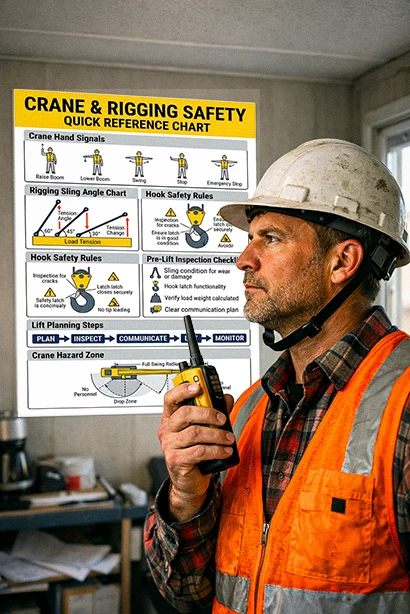
This crane and rigging safety chart is widely used in crane operator training programs, rigging certification courses, and workplace safety training to explain safe lifting procedures and equipment inspection steps.
Training instructors often use visual charts like this to teach crane and rigging safety concepts.
| Weight | N/A |
|---|


Reviews
There are no reviews yet.