


Sling Angle Safety Chart | Rigging Sling Angle Safety Poster
Price range: $36.99 through $45.99
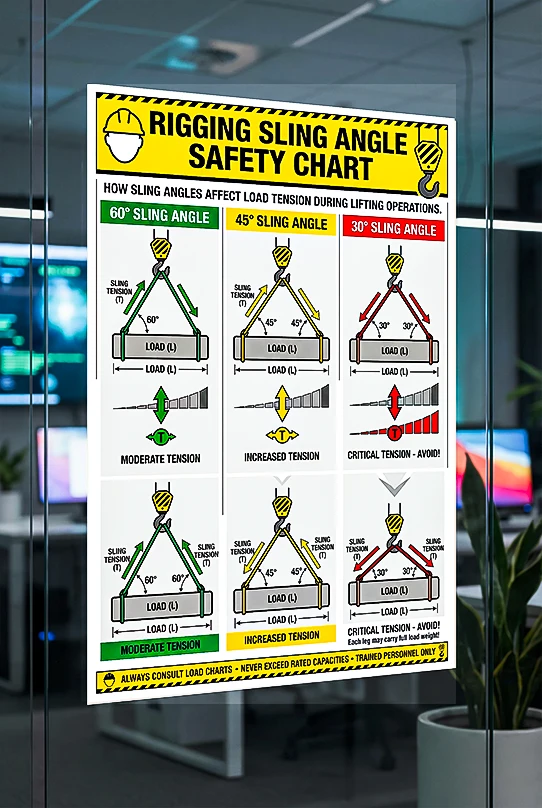
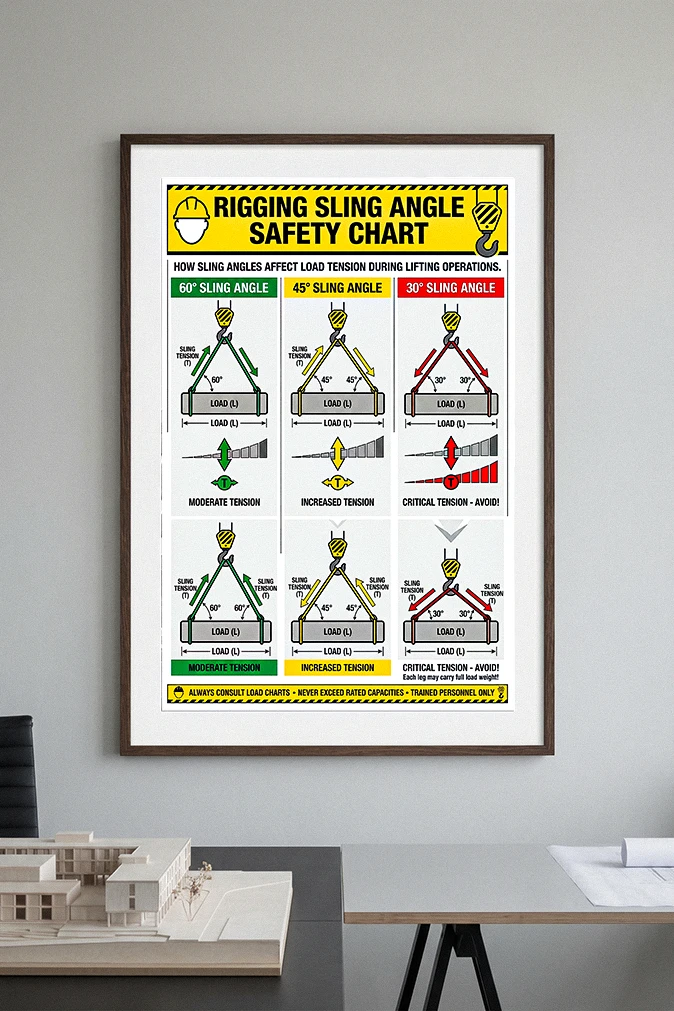
This sling angle safety chart explains how sling angles affect load tension during lifting operations. The poster visually demonstrates safe rigging practices using common sling angles such as 60°, 45°, and 30°. Ideal for construction sites, crane operations, and rigging training environments where workers must understand how sling angles impact lifting safety.
Sling Angle Safety Chart for Rigging Operations
Understanding sling angles is essential for safe lifting and rigging operations. This sling angle safety chart provides a clear visual explanation of how sling angles affect load tension when lifting heavy loads with cranes or hoisting equipment.
The sling angle safety chart demonstrates the relationship between sling angles and the amount of tension placed on lifting slings. When sling angles become smaller, the tension in each sling increases significantly. This sling angle safety chart shows how common rigging angles such as 60°, 45°, and 30° impact load stability and lifting forces.
At a 60-degree sling angle, tension remains moderate and the load is lifted more efficiently. The sling angle safety poster illustrates this configuration as a safer lifting setup because the load is evenly supported by the rigging.
At a 45-degree sling angle, tension begins to increase and additional stress is placed on the slings and lifting hardware. The sling angle safety chart helps workers understand why maintaining wider sling angles improves lifting safety.
At a 30-degree sling angle, tension becomes critical and can approach the working load limit of the rigging equipment. This sling angle safety chart warns that very shallow sling angles can dramatically increase forces on the slings and create dangerous lifting conditions.
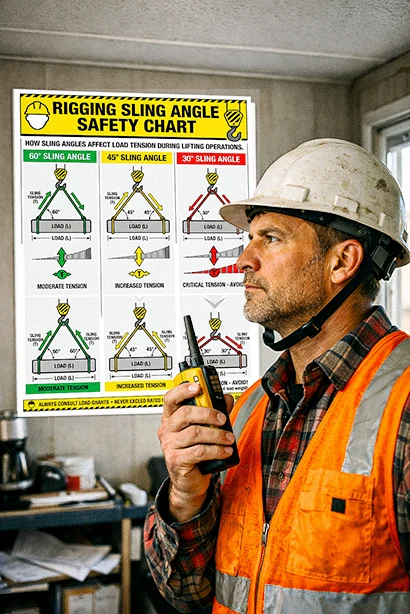
This sling angle safety chart poster is commonly used in construction sites, crane operations, rigging training classrooms, and safety meetings. Displaying a sling angle safety chart helps workers quickly understand the relationship between sling angle and load tension, improving rigging safety awareness.
By using this sling angle safety chart, workers and trainees can better understand proper rigging techniques and reduce risks during lifting operations.
What is a sling angle safety chart?
A sling angle safety chart is a visual guide used in rigging operations to show how sling angles affect the tension placed on lifting slings. The chart helps workers understand safe sling configurations and avoid dangerous lifting conditions.
Why are sling angles important in rigging?
Sling angles are important because smaller angles increase the tension in the lifting slings. As the sling angle decreases, the force placed on each sling increases significantly, which can exceed the safe working load limit of rigging equipment.
What is the safest sling angle for lifting?
Wider sling angles are generally safer because they distribute the load more evenly. Angles close to 60 degrees reduce sling tension compared to smaller angles such as 30 degrees, which can create very high forces in the rigging system.
What happens when sling angles become too small?
When sling angles become too small, the tension in each sling increases dramatically. This can overload slings, shackles, and lifting hardware, increasing the risk of equipment failure during lifting operations.
| Weight | N/A |
|---|


Reviews
There are no reviews yet.