


Rigging and Sling Safety Guide | Rigging Safety Poster
Price range: $36.99 through $45.99
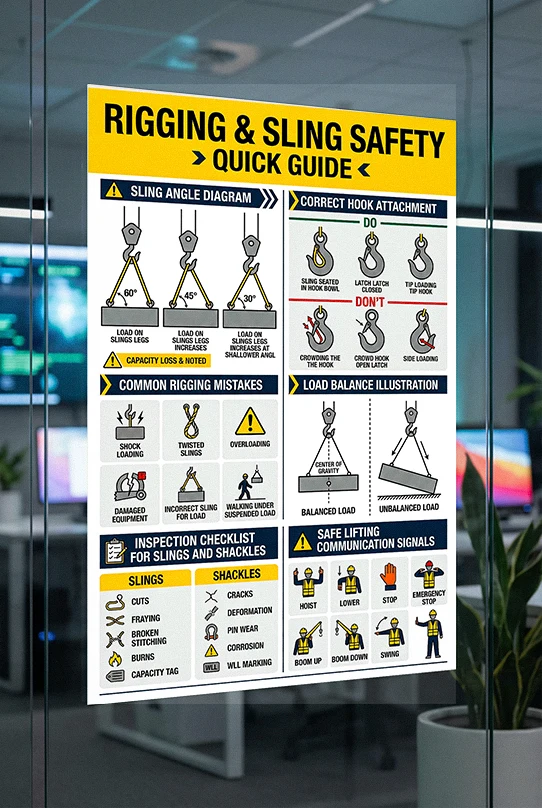
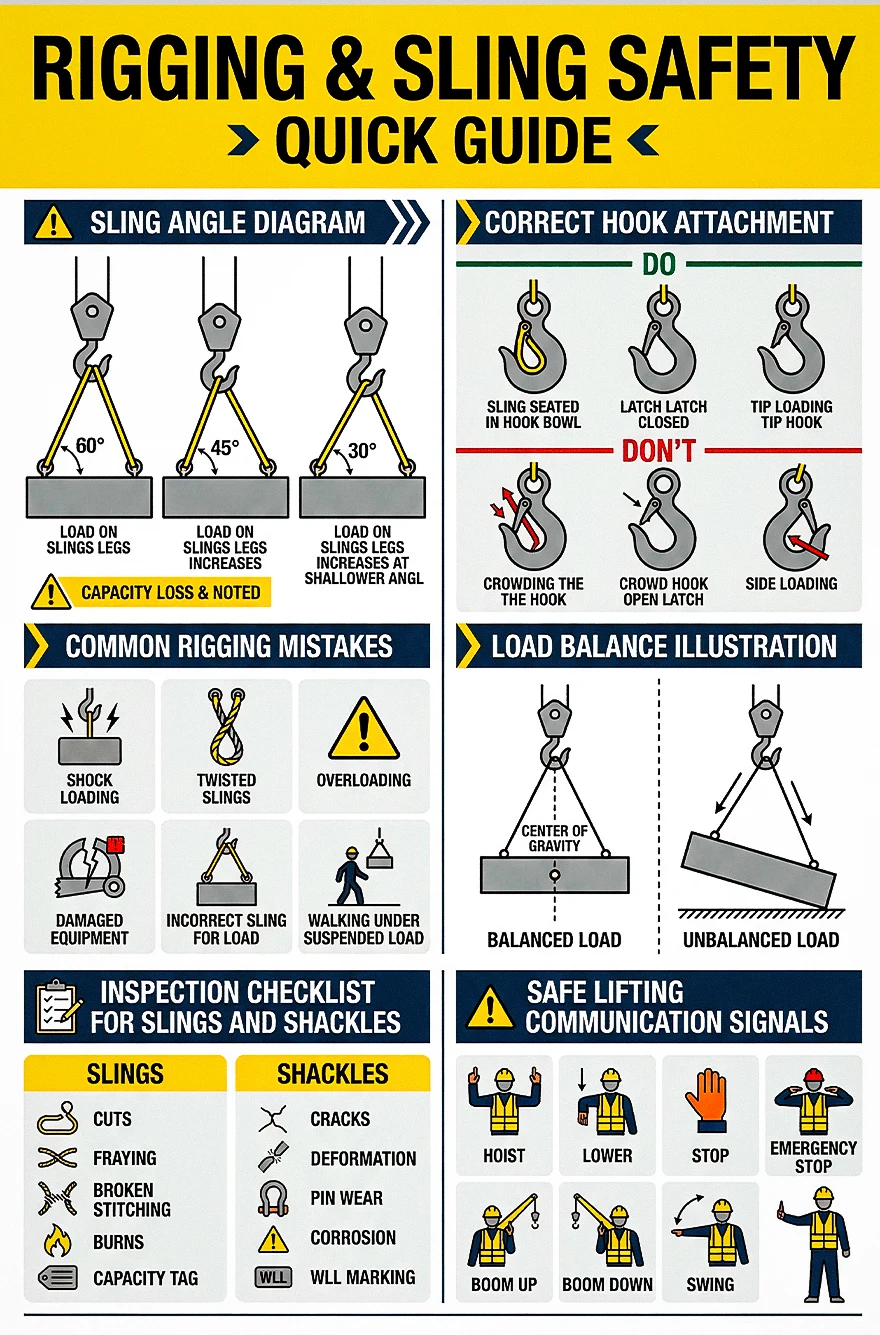
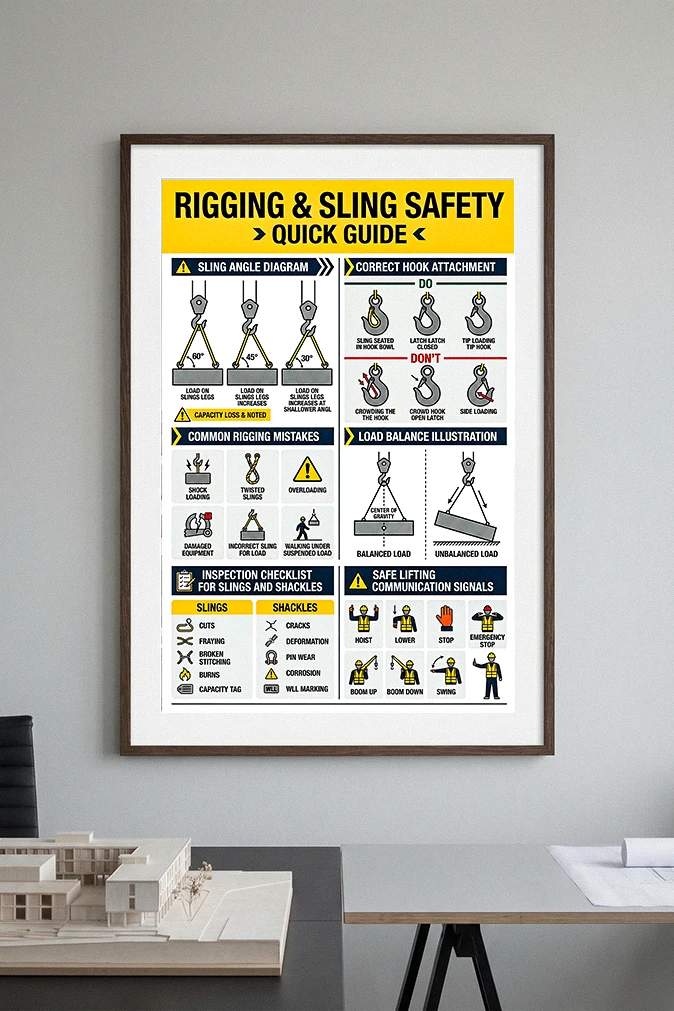
This rigging and sling safety poster provides a clear visual guide to essential rigging practices used during lifting operations. The chart explains sling angles, correct hook attachment, load balance, rigging inspection steps, and safe lifting communication signals. Ideal for construction sites, crane operations, and safety training environments where workers must follow proper rigging and sling safety procedures.
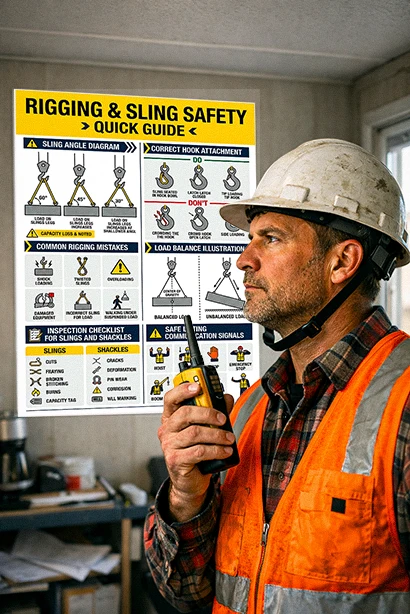
This rigging and sling safety guide is commonly used in crane operator training, rigging certification courses, and construction safety toolbox talks.
Rigging and Sling Safety Quick Guide Poster
Understanding rigging and sling safety is essential for preventing accidents during lifting operations. This visual rigging and sling quick guide poster provides a quick reference guide for workers performing lifting tasks using cranes, hoists, and rigging equipment.
The poster explains several important principles of rigging and sling safety, including proper sling angles, correct hook attachment, common rigging mistakes, load balance awareness, and inspection procedures for slings and shackles. These guidelines help workers perform lifting operations more safely and efficiently.
One important aspect of rigging and sling quick guide is understanding sling angles. The poster demonstrates how different sling angles affect load stability and lifting forces. Maintaining safe sling angles is critical for preventing excessive tension in the rigging system.
Correct hook attachment is another key component of rigging and sling safety. The poster shows proper hook seating and highlights common mistakes such as tip loading or improper latch positioning. These visual examples help workers recognize safe rigging practices.
The guide also identifies common rigging mistakes that can occur during lifting operations. Overloading, twisted slings, damaged equipment, and workers standing under suspended loads are all hazards addressed in this rigging and sling quick guide poster.
Inspection is another critical step. Regular inspection of slings and shackles is part of effective rigging and sling safety practices. Workers should check for cuts, fraying, cracks, deformation, and other signs of wear before lifting operations begin.
This rigging and sling quick guide poster also illustrates load balance and safe lifting communication signals used between crane operators and signal persons. Displaying a rigging and sling safety chart in workplaces helps reinforce safe lifting practices and supports safety training programs.
What is rigging and sling safety?
Rigging and sling safety refers to the safe use of lifting slings, hooks, shackles, and rigging hardware when moving loads with cranes or hoists. Proper rigging and sling safety practices help prevent dropped loads, equipment damage, and workplace injuries.
What should be checked before using lifting slings?
Before using lifting slings, workers should inspect the sling for cuts, fraying, broken wires, or excessive wear. Shackles and hooks should also be checked for cracks, deformation, and proper load ratings.
Why are sling angles important in rigging safety?
Sling angles affect the tension placed on lifting slings. As sling angles decrease, the tension in the slings increases significantly. Maintaining proper sling angles helps prevent overloading and improves lifting safety.
What are common rigging mistakes during lifting operations?
Common rigging mistakes include overloading equipment, using damaged slings, improper hook attachment, twisted slings, and workers standing under suspended loads. Following rigging and sling safety guidelines helps prevent these hazards.
| Weight | N/A |
|---|


Reviews
There are no reviews yet.